How Do Professionals Restore Your Fence and Railings to Like-New Condition?
You walk the backyard on the first warm Saturday of spring, coffee in hand, and the fence that looked fine under winter snow suddenly looks tired. The boards have gone gray and splintery, one section leans, and the railing by the steps wobbles when you grab it. You are not imagining it, and you are not stuck with it. Most fences and railings that look finished are not actually failing. Most are weathered only on the surface while the bones underneath are still sound, and that gap is exactly where restoration earns its keep.
After inspecting hundreds of these across Bucks County, here is the most useful thing up front: before you buy any stain or hardware, find out whether you have a surface problem or a structural one. A gray, mildewed fence with solid posts can come back to like new condition in a weekend or two. A fence with soft post bases or a railing that moves under hand pressure is a different job, and treating the second like the first wastes your effort.
Start Here Before You Buy Anything
Walk the full run and do three checks in order. First, grab each post and push. A post that flexes at the ground line has rot starting below grade, and that comes before any cosmetic work. Second, run your hand along the rails and pickets for soft spots, dark streaks bleeding from screws, and lifting boards. Third, look hard at the railings near steps, since those carry weight and fail quietly.
WARNING
If a stair or deck railing shifts when you lean on it, stop using it and keep people off it. A railing that moves is a fall hazard, not a cosmetic flaw, and a hard lean at the wrong moment can put someone over the edge.
TIP
Spray a hidden section with plain water and watch how fast it soaks in. Wood that drinks it instantly has lost its seal and is ready for cleaning and refinishing. Wood that beads is still protected and may only need a wash.
What Is Actually Breaking Your Fence Down
Moisture drives most of what you are seeing, and in our climate it works on a cycle. Wood takes in water during damp months, swells, then dries and shrinks, and every cycle opens the grain wider. In winter, water trapped in those fibers freezes and expands, splitting the surface from inside. That is why a fence can look fine in October and rough by April. Graying is UV wearing the surface fibers and is only cosmetic. Cupping, cracking, and soft post bases are moisture-related, and those are structural.
Fasteners cause more failures than people expect. Uncoated screws and nails corrode, bleed rust into the wood, and loosen their grip so boards rattle and pull away. On metal railings, trouble starts at base plates and welds where the coating thins, water pools, and rust creeps underneath. Shaded runs on the north side, common under Bucks County tree cover, stay damp longest and grow the green and black film first.
How We Inspect and Bring It Back
We start every restoration with the structure, not the surface, because finish on a failing post is wasted. We probe post bases at and below the soil line, and anything that sinks under light pressure gets replaced or sistered before refinishing. Next we check every connection, swapping corroded fasteners for properly coated hardware so old rust does not undermine the new finish.
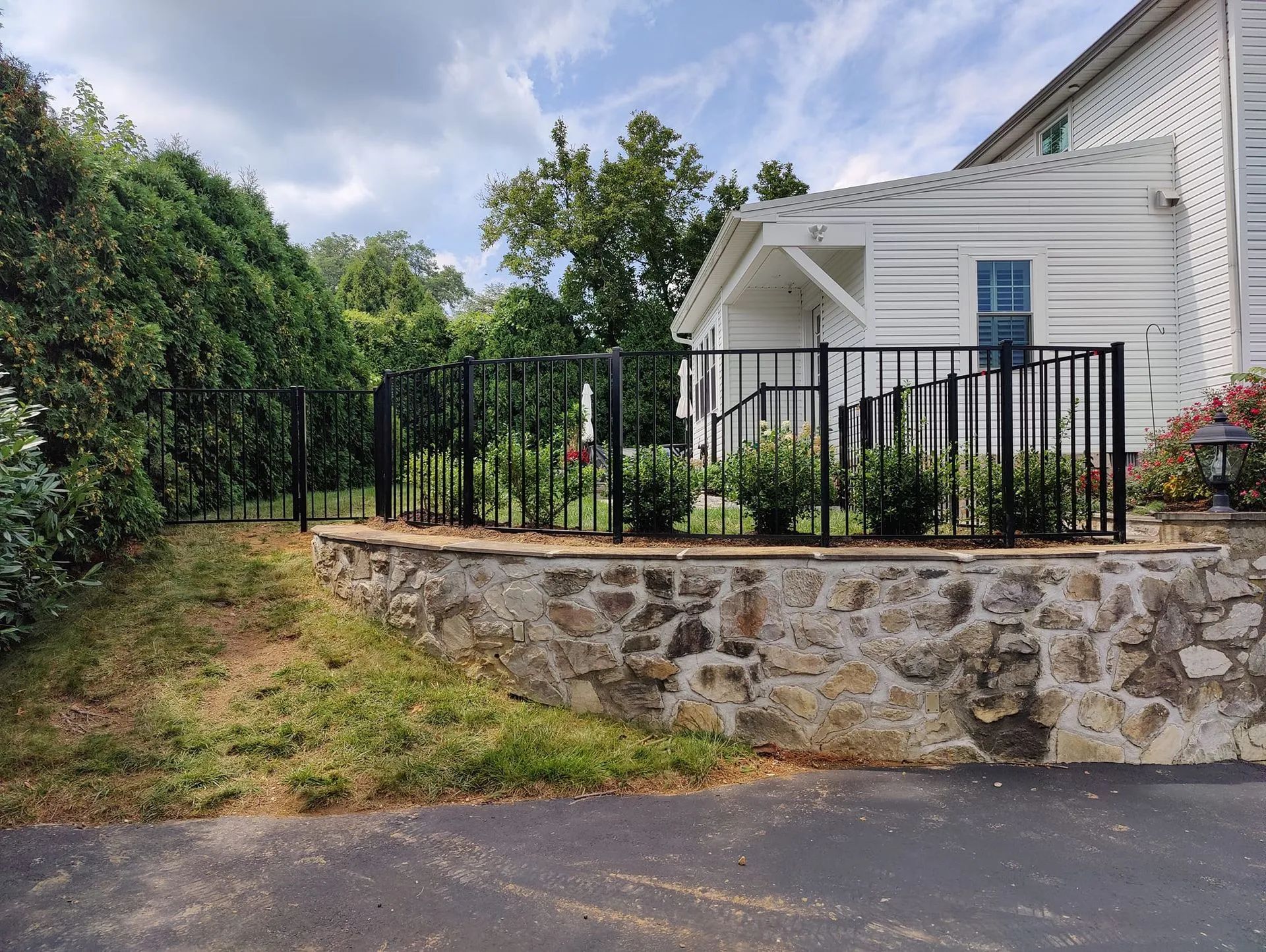
Only then does cosmetic work begin, and sequence matters. We clean at the right pressure for the material, usually well under 1,500 psi on softwood, since heavier pressure gouges the fiber and drives water in. We let the wood dry fully, often two to three clear days, because sealing trapped moisture is what makes finishes peel in a season. We sand raised grain, treat any mildew, then work stain or sealer into the grain rather than floating it on top. On iron and aluminum railings, we strip failed coating back to sound metal, prime the bare spots, and recoat so rust has nowhere to restart.
Restore, Repair, or Replace
Here is the honest version. If your posts are solid and the damage is surface gray, mildew, loose hardware, or a few cracked boards, restoration brings the whole run back with far less effort than replacement and can add seven to ten more years. If more than a third of the posts are soft at the base, or the fence leans in several spots no matter how you brace it, you are refinishing something already on its way out.
Railings follow the same rule with less patience. A wobbly railing with a sound post usually needs nothing more than the right anchors and tightened connections. A railing that moves because the post is rotting is a replacement, and patching it only hides a real safety problem until the day it gives.
Why Doylestown Weather Is Hard on Fences
Our seasons swing hard, and fences feel every degree. Winters here run through dozens of freeze and thaw cycles, each one prying at cracks that summer humidity opened. Clay heavy soil across Bucks County holds water around post bases long after rain, which is why rot here almost always starts below the soil line where you cannot see it. Snow piled against a fence keeps the bottom rail wet for months. Mature tree canopy shades many yards, so the damp, mildewed side of a fence is usually the one facing away from the afternoon sun. A restoration that holds up locally has to start underground and account for shade and runoff, not just the side you look at.
Keeping It Like New
Once a fence is restored, simple upkeep protects the work. Each month in the growing season, glance at the shaded runs for early mildew and rinse it off before it sets. Every spring and fall, walk the line, push test the posts, and tighten hardware that has worked loose. Once a year, reseal high exposure sections and clear leaves and soil piled against the base. Before winter, pull mulch and snow back from post bases so they are not sitting wet through the cold months.
The common mistakes are understandable. People blast the wood on full pressure to save time and tear the surface, driving water in. People stain over damp or dirty wood because the day looked fine, and the finish peels by midsummer. People seal over rot to hide it, which traps the moisture that caused it. The fix every time is patience: clean gently, dry fully, repair the structure first.
Frequently Asked Questions
Can a badly weathered fence really be restored?
Yes, in most cases. If the posts are solid and the damage is gray, mildewed, or splintered wood with loose hardware, we can clean, repair, and refinish it back to like new condition. Soft, rotting post bases are the main exception, and those usually need replacement.
How do I get rid of green and black stains on my fence?
Those are mildew and algae thriving on damp, shaded boards. A gentle cleaner with a low pressure rinse lifts most of it away. Restoring the protective finish afterward is what stops the growth from returning within weeks, especially on cooler, shaded runs that dry slowly.
Should I repair my fence or replace it?
Check the posts first. Solid posts with surface damage mean restoration is the smart call, and it adds years of life. When a third of the posts are soft at the base, or the fence leans in several spots, replacement protects you better than refinishing.
How long does a fence restoration last?
Done right, a quality restoration holds for seven to ten years before the finish needs renewing. Lifespan depends on exposure, with shaded, high moisture runs needing attention sooner. Keeping mulch and snow pulled back from post bases each season stretches that timeline out considerably.
Is it safe to use a wobbly deck or stair railing until I get it fixed?
No, treat a loose railing as out of service. A railing that shifts under your hand can give way under full weight, and that is a serious fall risk near steps and landings. Keep people off it and have it secured before normal use resumes.